• Home
  • About
    • Our Supporters
    • Corporate Support
    • The Hub
    • Why This Site?
    • Our Philosophy
    • The Challenges
    • Missed a Post?
  • The Basics
    • Historical Tradition >
      • Cave of Altamira
      • Tutankhamun's Tomb
      • The Bayeux Tapestry
      • Stations of the Cross
      • A Rake's Progress
    • Terminology >
      • Defining the Form
      • The Language of Comics
      • Filmic Language, Part 1
      • Filmic Language, Part 2
      • Language of the Gaze
    • A Rationale for Comics
    • Next Steps
    • Glen's Portfolio >
      • Boldprint
      • Timeline
      • The 10
      • Graphic Poetry
      • Boldprint Kids Graphic Readers
      • Boldprint Graphic Novels
      • Interface and ILit
      • Remix
      • Issues 21
      • Other Books
  • Graphica
    • Scholarship
    • Happening Now
    • Graphic Novels
    • About the Form
    • For Educators
  • Classroom
    • Activities >
      • Exemplars
    • Curriculum Connections >
      • Videos
      • PowerPoints
    • FAQ
    • Links
    • Support
  • Store
    • Codes
    • Go for the Pin!
  • Contact
COMICS IN EDUCATION
  • Home
  • About
    • Our Supporters
    • Corporate Support
    • The Hub
    • Why This Site?
    • Our Philosophy
    • The Challenges
    • Missed a Post?
  • The Basics
    • Historical Tradition >
      • Cave of Altamira
      • Tutankhamun's Tomb
      • The Bayeux Tapestry
      • Stations of the Cross
      • A Rake's Progress
    • Terminology >
      • Defining the Form
      • The Language of Comics
      • Filmic Language, Part 1
      • Filmic Language, Part 2
      • Language of the Gaze
    • A Rationale for Comics
    • Next Steps
    • Glen's Portfolio >
      • Boldprint
      • Timeline
      • The 10
      • Graphic Poetry
      • Boldprint Kids Graphic Readers
      • Boldprint Graphic Novels
      • Interface and ILit
      • Remix
      • Issues 21
      • Other Books
  • Graphica
    • Scholarship
    • Happening Now
    • Graphic Novels
    • About the Form
    • For Educators
  • Classroom
    • Activities >
      • Exemplars
    • Curriculum Connections >
      • Videos
      • PowerPoints
    • FAQ
    • Links
    • Support
  • Store
    • Codes
    • Go for the Pin!
  • Contact
COMICS IN EDUCATION
What's new?

Crash, Bam, Pow! -- How Comics Taught Me that Wordle Rules!

3/25/2014
by Glen Downey, Comics in Education, www.comicsineducation.com
Picture


Tag Clouds Are Powerful Learning Tools that Draw upon the Power of the Visual!

One thing that comics taught me was the power of a visual medium to tell me something that I needed to know about a story, its plot, its characters, and how to make meaning of a narrative. It also got me thinking that other visual devices must be similarly effective, even when applied to other kinds of texts. I had also always been fascinated by Discourse Analysis, a branch of literary and textual studies that examines how discourse unfolds in everything from a series of comic books to a website devoted to spoiler updates about that series of comic books!

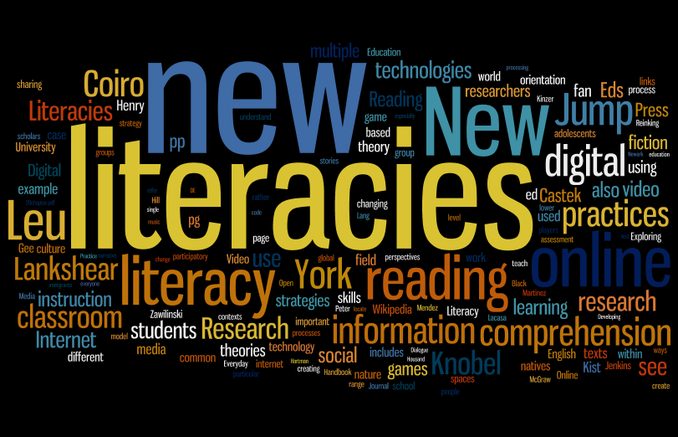
At www.wordle.net, however, you can find an immensely powerful visual tool. Now if you've worked in education you've seen these over and over again. No doubt your state or provincial governing bodies for education have distributed materials containing tag clouds like the one above that contain key terms. In these clouds, words that appear more frequently are larger in size. As it turns out, though, there is significant application in the English classroom for these.

Here's something you can try (actually, you should have your students do this as a regular habit):

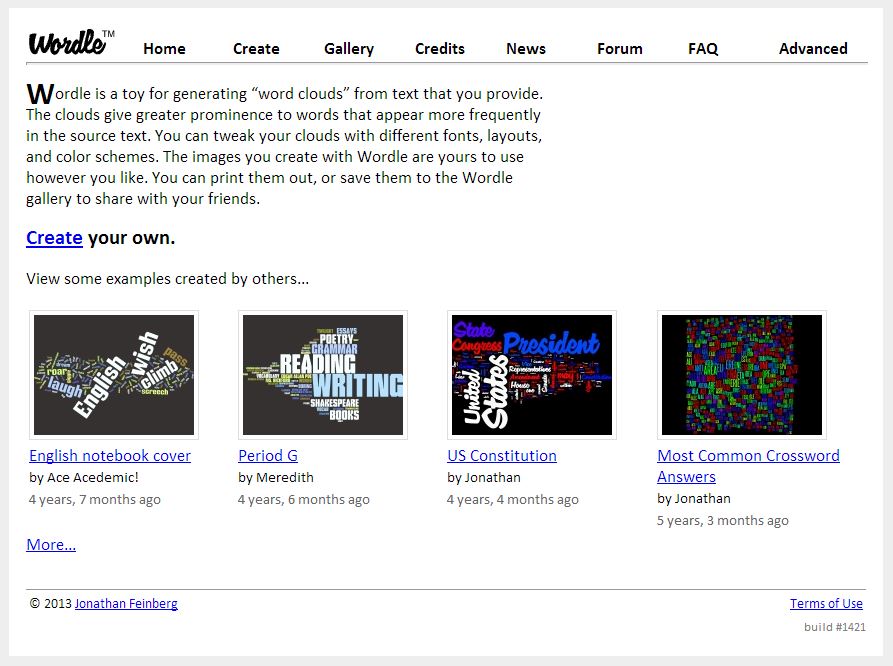
1. Prior to submitting an essay or writing assignment, have students cut and paste the assignment into a Wordle. The students go to www.wordle.net (they can also use the website Tagxedo, but Wordle is quick and effective). The student cuts and pastes their writing by clicking on the Create tab.
Picture

Picture

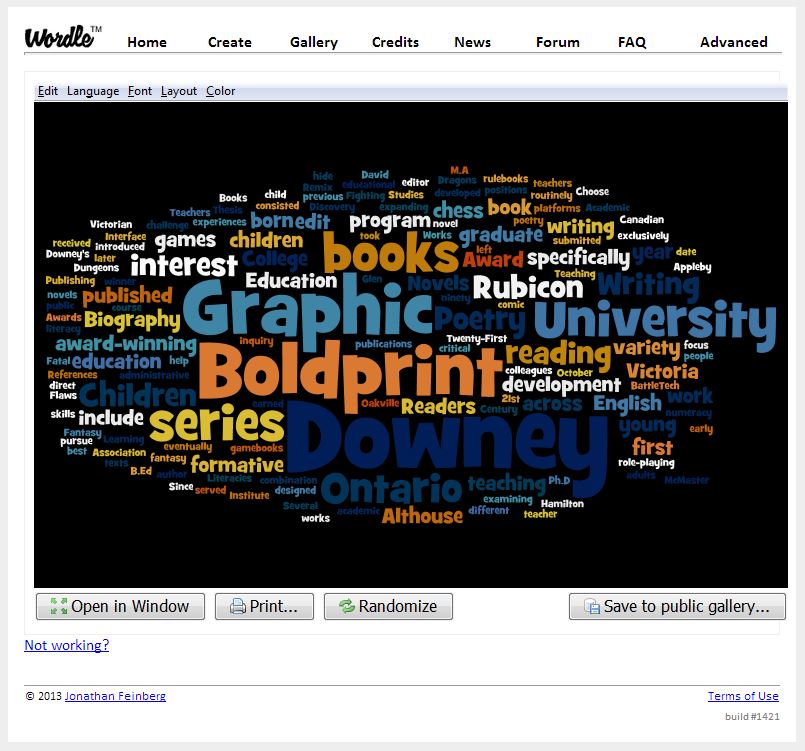
2. Once you hit "Go," Wordle will take the student's text and create a word or tag cloud out of it. By looking closely at the Wordle, a student can glean a lot of information!
Picture

So What Is This Important Information?

Before we get to that, make sure that the student goes to the Language tab and clicks on "Remove Common English Words" so that it is unchecked. This will allow the student to see all of the words in the Wordle. Now get the student to find the important information about his or her writing below:


  • Have them look at the largest words in their Wordle. Are the words what they would expect them to be (i.e. "the," "a," "of," "to," etc.)? Chances are these will be the most common words, along with perhaps the name of an author or work they are discussing. However, if there is an unusual word that is among the largest, this could be a potential problem (e.g. words like "would," "did," "happens," "fact," etc.). Having a great number of iterations of these slightly less common words might indicate they are being significantly overused by the student.
  • Get them to look for the words "and" and "because." If they can't see them in the Wordle or they are very tiny, then chances are what the student has written consists of several simple sentences. When kids find this happening, they should check their work to see if there is sufficient sentence-length variety and not a succession of short stilted sentences.
  • Generally speaking, have the student look for relative word distribution in their writing. To show them what this means, get them to put the lyrics of a folk song from someone like Gordon Lightfoot, Bob Dylan, or Joni Mitchell in a Wordle. Then have them take a look at "Halo" by Beyonce. They'll quickly be able to see how dominant the word "Halo" is in the latter's song, and how in ballads and songs that tell stories, the words are much more evenly distributed.

Try this great visual activity with your students and let me know how it goes. Watch, too, to see if some of the "language" of talking about Wordles begins to rub off on how they talk to one another about their writing during peer editing and revision sessions (e.g. "I notice in your Wordle that you use the words `due' and `fact' a lot; you might be saying `due to the fact that' too much and should replace it with `because'"). In my experience of using this activity, I find that their language will start to change a bit!
0 Comments

Your comment will be posted after it is approved.


Leave a Reply.

    Follow @teachingcomics

    our  store
    our codes
    navigation
    contact us

    Picture

    Glen Downey

    Dr. Glen Downey is an award-winning children's author, educator, and academic from Oakville, Ontario. He works as a children's writer for Rubicon Publishing, a reviewer for PW Comics World, an editor for the Sequart Organization, and serves as the Chair of English and Drama at The York School in Toronto.

    Picture

    If you've found this site useful and would like to donate to Comics in Education, we'd really appreciate the support!
    Picture

    Comics in Education

    Archives

    February 2019
    September 2018
    June 2018
    March 2018
    April 2017
    November 2016
    May 2016
    April 2016
    February 2016
    September 2015
    August 2015
    May 2015
    April 2015
    March 2015
    February 2015
    December 2014
    November 2014
    October 2014
    September 2014
    August 2014
    June 2014
    May 2014
    April 2014
    March 2014


    RSS Feed

Powered by Create your own unique website with customizable templates.